
From Michael Kors’ encouraging financial turnaround to Chanel’s latest creative triumph, a celebration of American style in Tokyo, and the growing influence of African fashion, Friday delivered a revealing look at where the industry is heading.
The fashion industry rarely moves in a single direction. While some luxury houses are fighting to win back shoppers, others are investing in their creative identities, expanding into new markets, or finding fresh relevance in their archives.
Today's headlines capture that tension. Michael Kors is showing early signs of a recovery, Matthieu Blazy is collecting accolades for his work at Chanel, and Ralph Lauren is celebrating the communities that helped turn an American label into a global cultural institution. Meanwhile, Max Mara and Lagos Fashion Week are offering different visions of what fashion's international future could look like.
Here are five developments worth paying attention to.
1. Michael Kors' parent company surges as luxury investors see signs of recovery
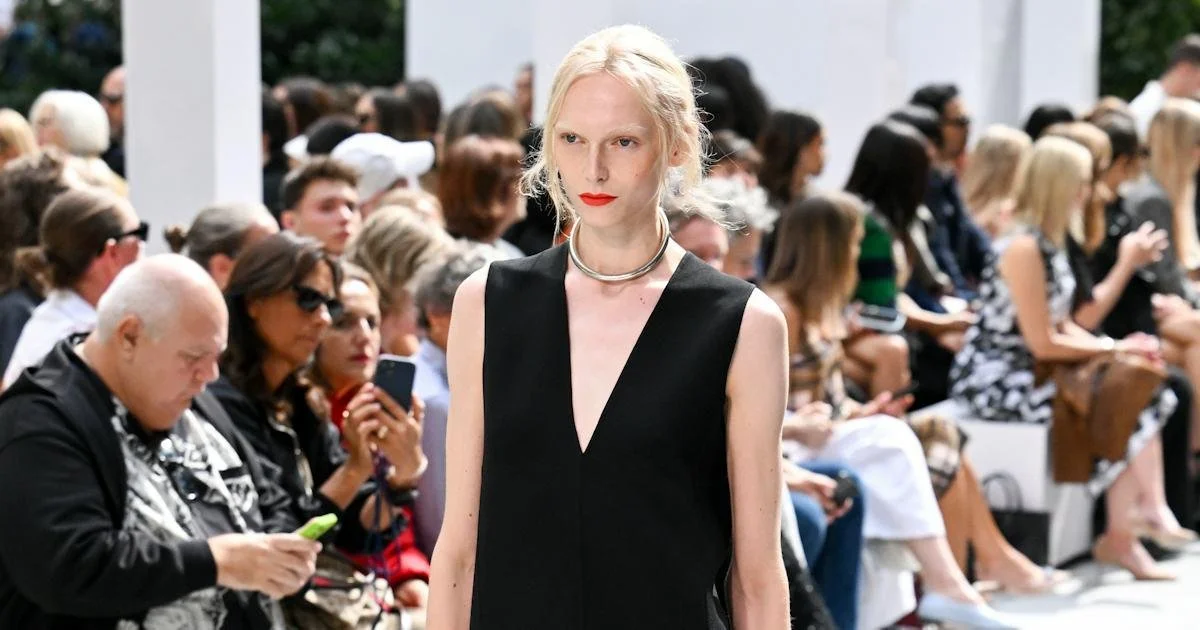
Image credit / source: Gilbert Flores / WWD via Getty Images, published by W Magazine
After a difficult period for accessible luxury, Capri Holdings is giving investors a reason to reconsider its outlook.
The parent company of Michael Kors and Jimmy Choo saw its shares climb more than 19% on Friday after raising its full-year financial forecasts. Capri now expects approximately $3.42 billion in annual revenue and adjusted earnings of $2.20 per share.
The numbers tell a more complicated story beneath the stock market enthusiasm. Michael Kors sales still declined 8.6% in the latest quarter, while Jimmy Choo recorded roughly 12% growth. Management expects new collections, stronger marketing, and improving consumer demand to help return the business to sales growth.
The development is significant because Michael Kors occupies a challenging segment of the market: luxury positioning at prices that still depend heavily on aspirational consumers. Those shoppers have become increasingly selective.
Capri's improved outlook suggests its turnaround strategy may be gaining traction, although a sustained recovery has yet to be demonstrated.
For an industry searching for evidence that consumers are ready to spend again, Friday's market reaction was difficult to ignore.
SOURCE: Reuters, October 30
2. Chanel's Matthieu Blazy takes center stage at the WSJ. Innovator Awards
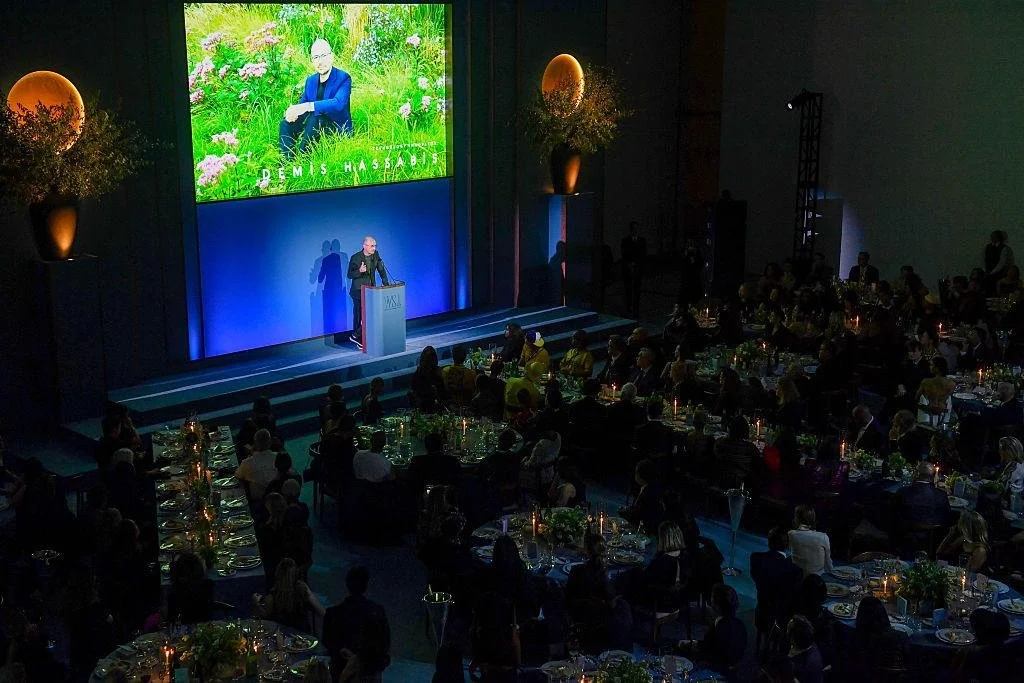
View the corresponding event photograph (licensed editorial image): Dua Lipa at the WSJ. Innovator Awards — Getty Images
Image credit / source: Angela Weiss / AFP via Getty Images (licensed image preview)
Chanel creative director Matthieu Blazy was recognized as a Fashion Innovator at the 2026 WSJ. Magazine Innovator Awards, drawing some of the industry's most recognizable names to New York's Museum of Modern Art.
Dua Lipa and A$AP Rocky presented Blazy with the honor, but it was Lipa's Chanel couture ensemble that became one of the evening's biggest fashion talking points.
The singer appeared in a cream skirt suit featuring elaborate floral embroidery, pearl detailing, and dramatic black accents, topped with an unconventional sculptural hat. The look combined traditional Chanel codes with the experimental textures and unexpected proportions associated with Blazy's creative direction.
The evening was more than another celebrity red carpet. It demonstrated how central Blazy has become to Chanel's evolving public identity.
At a time when major fashion houses are under pressure to deliver both commercial success and cultural relevance, Chanel is leaning into a designer whose work emphasizes craftsmanship, experimentation, and personality.
SOURCE: Harper's Bazaar, October 30
3. Ralph Lauren celebrates 60 years of style with Polofest in Tokyo
Image credit / source: Ralph Lauren promotional image, published by Vogue
Six decades after establishing his namesake label, Ralph Lauren is celebrating the people who helped transform his designs into a global fashion language.
The inaugural Polofest in Tokyo brought together collectors, vintage enthusiasts, celebrities, and longtime fans for a three-day celebration in Shibuya. The event featured archival clothing from 17 prominent sellers, discussions about collecting, and photographs documenting Lauren's relationship with Japan.
The choice of Tokyo was intentional. Japanese fashion culture has played a particularly important role in preserving and reinterpreting American heritage style. From collegiate clothing to vintage Polo pieces, Japanese collectors have helped sustain demand for the brand's earlier designs.
Musician André 3000 was among the notable figures participating in the celebration, which marks the beginning of a larger series of global events planned around the anniversary.
But Polofest also reflects a broader change in fashion marketing. Heritage brands increasingly recognize that their archives are more than historical collections. They offer stories, authenticity, and a sense of belonging that newer labels often spend years trying to develop.
For Ralph Lauren, the message is clear: a brand's influence is measured not only by what it sells, but by how people make its designs their own.
SOURCE: Harper's Bazaar, October 30
4. Lagos Fashion Week places African craftsmanship and sustainability in the spotlight
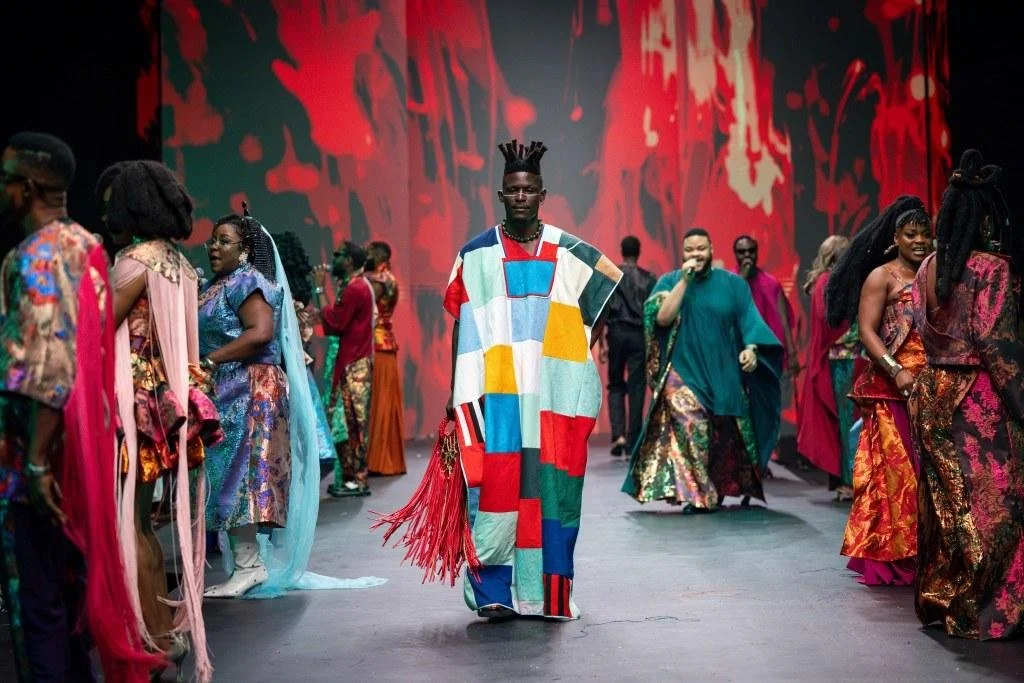
Image credit / source: Courtesy of NKWO / Vogue Runway — archival image, not the October 2026 event
As the international fashion calendar continues expanding beyond its traditional European and American centers, Lagos Fashion Week is making a compelling argument for Africa's growing influence.
The event's 15th edition, themed Crafted, is placing particular emphasis on craftsmanship, cultural heritage, and circular fashion.
Designers associated with the program include Lisa Folawiyo, Nkwo, Orange Culture, and Emmy Kasbit, representing different expressions of contemporary African design.
The focus extends well beyond runway aesthetics. Organizers are drawing attention to the economic infrastructure required to build a sustainable fashion industry, including manufacturing capacity, access to financing, and distribution.
Those challenges are particularly important as international attention on African designers grows. Global visibility can introduce a label to new audiences, but visibility alone doesn't guarantee lasting commercial success.
Lagos Fashion Week is positioning craftsmanship as both a cultural asset and an economic opportunity. Its emphasis on local production and responsible design offers an alternative to an industry often driven by speed, scale, and constant consumption.
For fashion's next generation, the question is no longer simply which cities produce influential designers. It is also which cities can build the businesses and creative communities necessary to support them.
SOURCE: Lagos Daily, October 30
5. Max Mara looks toward the future while celebrating 75 years of Italian elegance
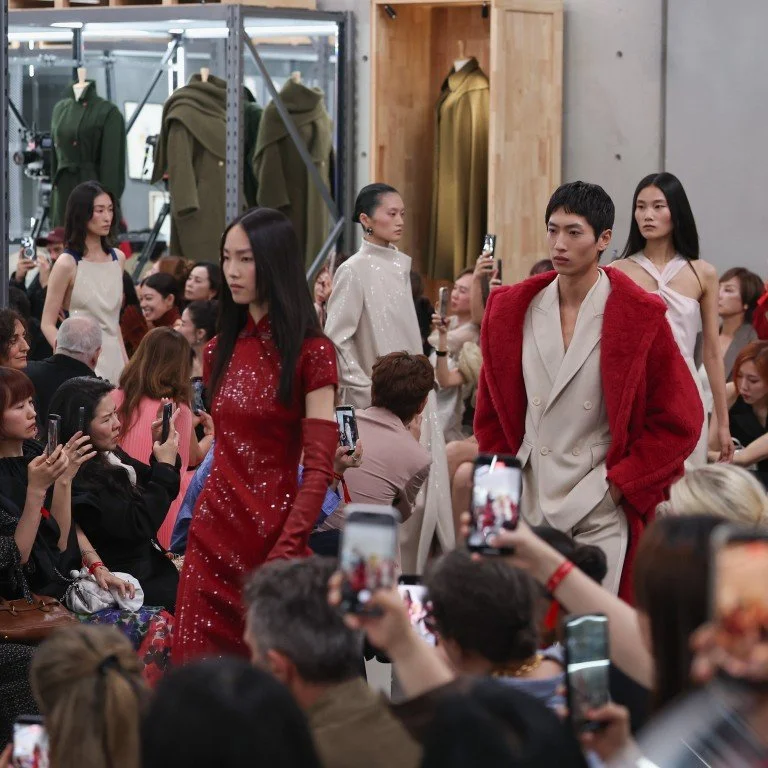
Image credit / source: South China Morning Post / Max Mara show coverage; photographer not independently confirmed
Italian fashion house Max Mara is receiving renewed attention today through an in-depth look at its 75th-anniversary presentation in Shanghai.
The event itself took place earlier this year, but the newly published coverage offers fresh insight into how creative director Ian Griffiths approached the house's Resort 2027 collection.
Presented at the Long Museum West Bund, the collection, titled Kinetic Chic, combined Max Mara's signature tailoring with architectural references, jewel tones, and textile-inspired patterns.
The collection drew on the work of artist Anni Albers while incorporating details associated with Asian dress, including traditional closures and belt shapes.
The setting was also significant. Max Mara has operated in China for more than three decades, and the brand's presence there includes hundreds of stores. Shanghai was a natural setting for a celebration intended to connect Italian heritage with the company's international ambitions.
An accompanying archival exhibition explored the label's history through garments, sketches, textiles, and design objects.
Rather than relying entirely on nostalgia, the anniversary offered an opportunity to demonstrate how a heritage fashion house can maintain a recognizable identity while responding to changing cultural influences.
For Max Mara, the enduring appeal of its coats and understated tailoring remains central. The challenge is keeping those familiar signatures desirable to a new generation of luxury consumers.
SOURCE: ELLE, October 30
What today's fashion news tells us
Taken together, Friday's stories reveal an industry balancing commercial reality with creative ambition.
Capri Holdings is attempting to rebuild momentum through product and marketing. Chanel is investing in a creative identity that generates both prestige and conversation. Ralph Lauren and Max Mara are demonstrating the value of decades of brand history, while Lagos Fashion Week is focused on building an industry capable of supporting emerging creative talent.
There is a common thread: the strongest fashion brands are finding ways to make their identities mean something beyond the clothes themselves.
That may involve revitalizing a familiar label, protecting traditional craftsmanship, or building new communities of customers and collectors. Whatever the approach, fashion's commercial future appears increasingly tied to its cultural relevance.
And as October comes to a close, the industry is offering plenty of evidence that heritage and innovation don't have to be competing ideas.
Editorial note: These five stories were selected from coverage published October 30, 2026. Some report on events held earlier in the year. The selection reflects editorial relevance rather than a measured ranking of the day's most-read news.
